Radio and TV appearances and newspaper interviews from 2003 to 2019, all in Bulgarian; here each one is summed up in English. Videos with Prof. Kastelov are on his YouTube channel.
201915.01.2019 · BNR, Hristo Botev programme
Guarding against fractures and injuries – and getting over the pain if one happens
Guest in the studio: Assoc. Prof. Rumen Kastelov, head of a clinic at the MVR hospital. The topics: fractures and their treatment in childhood, scars and the memory of the body, age-related changes in the joints, osteoporosis and brittle bones.
201623.02.2016 · Forum Medicus
What’s new, doctor?
A conversation with Stoycho Stoev. The new thing is his workplace at the Medical Institute of the MVR, after St Anna University Hospital and Pirogov. The clinic regained the status of a clinic in 2015, has the third level of competence and can treat up to 15 inpatients. He also talks about the team, the young doctors, his teaching at the Department of Kinesitherapy of South-West University in Blagoevgrad, and the Kastelov family, which comes from Dupnitsa.
Interview by Yana Boyadzhieva. Flu viruses can attack the large joints – knee, hip, shoulder – and cause synovitis, an inflammation of the joint lining. Joints already affected by arthrosis, gout, rheumatism, arthritis, diabetes or psoriasis are more prone, though no joint is immune. If fluid has collected, draining and testing it calms the joint fastest; without infection, anti-inflammatory drugs and physiotherapy can solve the problem in 10–15 days. He also explains knee replacement and tibial osteotomy.
The two menisci act as shock absorbers between the thigh bone and the shin. They tear when the bent knee twists – most often in contact sports such as football, handball and basketball, but also when squatting or getting up from a stool. The diagnosis rests on an X-ray, specific tests and an MRI. If the knee locks and hurts with every step, arthroscopy removes or sews the torn part; walking is allowed the next day or the day after. The National Health Insurance Fund covers the surgery and one course of rehabilitation.
Interview by Petar Kolchev with Assoc. Prof. Dr Rumen Kastelov, then head of the Third Trauma Clinic at Pirogov hospital: a young skier with a severe knee fracture, the many winter fractures of the ankle and wrist, young doctors in the specialty, joint meetings with rheumatologists – in Belgrade with colleagues from Bulgaria, Serbia and Greece, and at an osteoporosis conference in Sandanski – and the slower recovery of elderly patients.
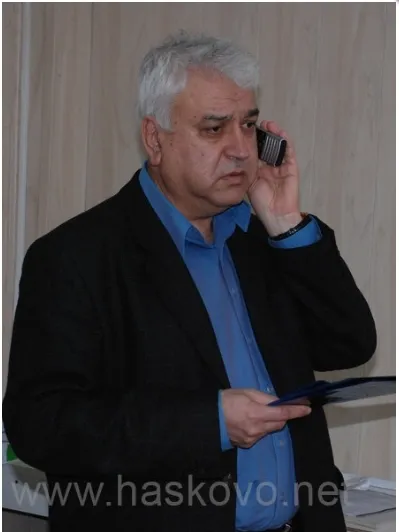
Assoc. Prof. Kastelov has a fever of 40° C, but does not cancel his consultations in Haskovo
Despite the flu that laid him low at the end of the previous week, he did not want to disappoint his dozens of patients in Haskovo and moved his visit to the town from the next day to Thursday.
Assoc. Prof. Rumen Kastelov had then been a specialist in orthopaedics and traumatology for more than 24 years. He explains which fractures are treated with nails – those of the thigh, shin and upper arm, and above all those around the hip, where the operation has become much shorter and the patient can stand on the leg a day later – and why older people with osteoporosis, unstable blood pressure, poor sight, balance or muscles are more prone to falls and fractures.
“On 5 November, after the competition had been sent back several times, Rumen Kastelov was confirmed as associate professor. His career began in Ruse, where he was assigned as an anaesthetist at the local clinic after graduating. Only six months later he won a competition and became a research associate at the Institute of Orthopaedics, General Orthopaedics clinic, in Gorna Banya. He worked there for four years, specialised, and in 1991 moved to Pirogov. Today, twelve years later, he is head of a ward at the First Traumatology.”